Promoter (NPS)
✓ Cloud or on-premise · ✓ Kiosk, QR, SMS, email and web · ✓ Live in one day
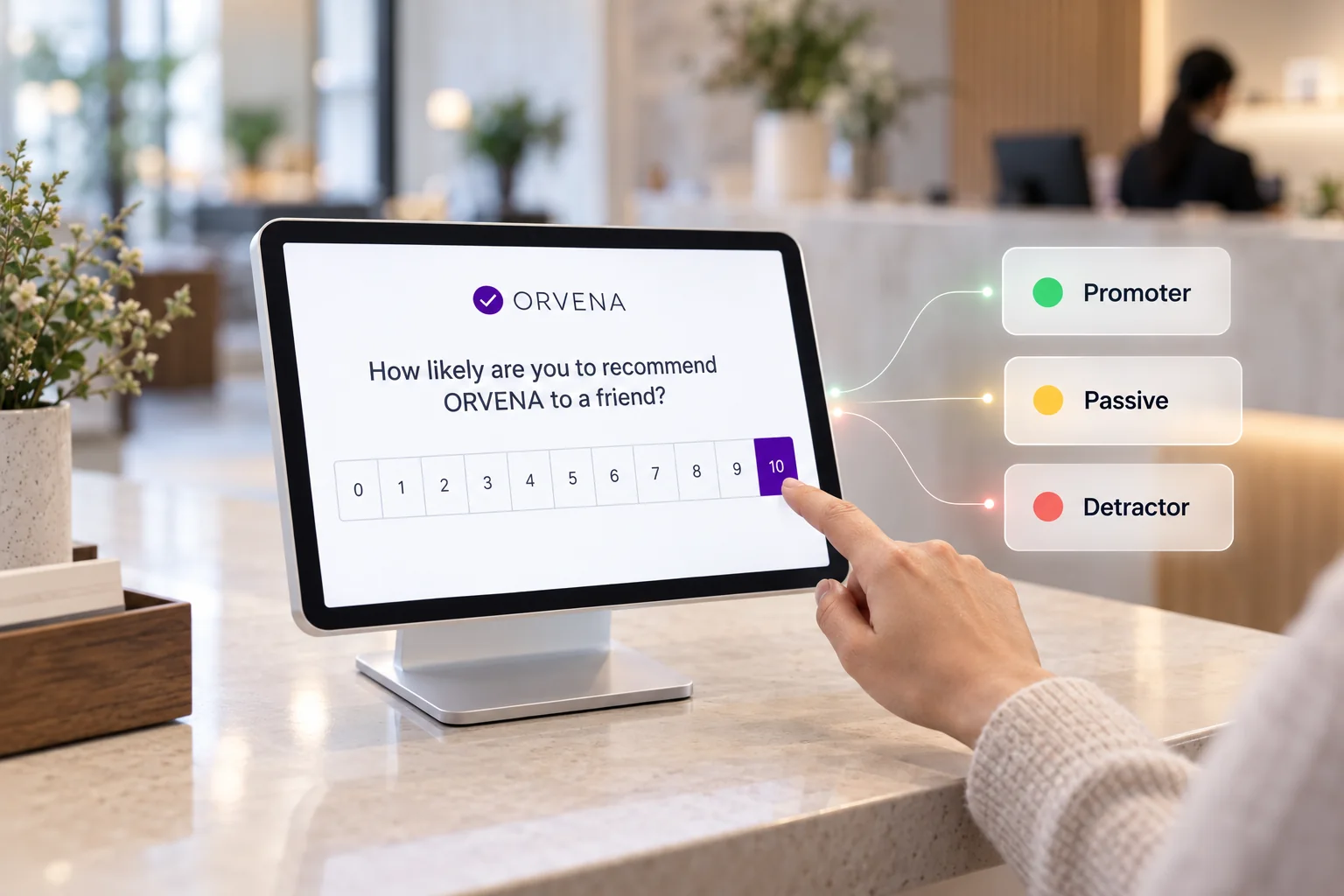
A promoter is a customer who answers 9 or 10 on the Net Promoter Score question “How likely are you to recommend us to a friend or colleague?”. Promoters are your most loyal customers and the main source of referrals and positive reviews; the NPS formula starts from their share and subtracts the share of detractors.
What an NPS promoter is
In the Net Promoter System, introduced by Fred Reichheld and Bain & Company in the Harvard Business Review in 2003, every respondent is placed in one of three groups by their 0–10 answer: promoters (9–10), passives (7–8) and detractors (0–6). The bar for promoters is deliberately high. A recommendation puts the customer’s own reputation on the line, so only the top two scores are taken as a sign of active loyalty.
Promoters typically buy again, try new services, tolerate the occasional mistake and talk about you positively. They are also the customers who are most willing to write a public review — if they are asked at the right moment.
How promoters drive the Net Promoter Score
NPS = % promoters − % detractors, on a scale from −100 to +100. For the full method, see what is NPS.
Example: a restaurant group receives 500 responses in a month — 260 promoters (52%), 150 passives (30%) and 90 detractors (18%). NPS = 52 − 18 = 34. If the group converts 40 passives into promoters, promoters rise to 60% and NPS to 42.
Note what does not raise NPS: an 8 becoming a 7, or a 9 becoming a 10. Only movement across the group boundaries changes the score, which is why the gap between 8 and 9 deserves special attention.
How to activate promoters
Most feedback programs spend all their attention on detractors and leave promoters untouched. Closing the loop with promoters is cheap and often more valuable:
- Thank them. A short, specific thank-you shows the response was read.
- Invite a public review. A customer who has just given you a 10 is the best possible reviewer. Ask once, politely, while the experience is fresh — never offer rewards in exchange for positive reviews.
- Learn what delighted them. Promoter comments describe what your best branches and staff do right; share them with the teams involved.
- Offer a referral path where it fits the business.
- Invite them into improvements — early access, pilot groups, user panels.
In Qmeter, conditional logic can show a different follow-up question or thank-you text to customers who answer 9–10, and positive comments can be filtered by branch so managers can recognise the staff who earned them. Public reviews on Google can be managed from the same workspace via Google review management.
Example: what separates promoters from passives
Example: a clinic group compares comments from 9–10 scorers with comments from 7–8 scorers over a quarter. Promoter comments repeatedly mention a doctor “explaining the results clearly” and “a call the next day”. Passive comments mention the same good care but “no follow-up”. The clinic adds a standard follow-up call after test results — and tracks whether the share of promoters rises at the sites that adopt it first.
Promoter share as a KPI in its own right
NPS combines two groups into one number, which can hide what is happening. Two branches with an NPS of 30 can look very different: one with 50% promoters and 20% detractors, another with 35% promoters and 5% detractors. The first creates many fans and many critics; the second is consistent but rarely memorable. They need different actions.
That is why many teams report the promoter share alongside NPS:
- By branch and team — where do customers leave enthusiastic, and what do those teams do differently?
- By touchpoint — which moments create promoters (often a problem solved well) and which never do?
- Over time — a falling promoter share with a stable detractor share is an early sign that the experience is becoming ordinary.
The same logic applies to employee NPS: staff who score 9–10 on recommending their workplace are the colleagues most likely to help recruit and onboard others.
Common mistakes with promoters
- Ignoring them because nothing is broken.
- Counting 8s as promoters. In NPS they are passives; inflating the promoter count makes the score incomparable.
- Asking for reviews from everyone instead of following the customer’s own signal — or, worse, filtering who may review based on score in ways the review platform forbids.
- Coaching customers (“anything below 9 is a fail for me”) — it distorts the data.
- Looking at the score only. Promoter comments are the best playbook you have for what works.
Frequently asked questions
What score is a promoter in NPS?
A promoter answers 9 or 10 on the 0–10 Net Promoter Score question about how likely they are to recommend the company to a friend or colleague.
Is an 8 a promoter?
No. In the Net Promoter Score method, 7 and 8 are passives. They are counted in the total number of responses but not in the promoter or detractor percentages.
Why do promoters matter?
Promoters are more likely to stay, buy again and recommend you, and they are the customers most willing to leave positive public reviews. They are also the clearest source of evidence for what your service does well.
Should you ask promoters for reviews?
Asking satisfied customers to share their experience publicly is common practice, but follow the review platform’s rules: do not offer incentives for positive reviews and do not misrepresent who is being asked.
Measure it at every location — live in one day
Feedback kiosks, QR and web surveys, SMS and email, real-time alerts and follow-up tickets in one platform. 14-day free trial.
✓ 15 minutes · ✓ No commitment · ✓ A real CX person