No external services at all
No cloud dashboard, no vendor-hosted survey links, no external SMS or e-mail provider. Every channel the programme uses must exist inside the network or pass through a gateway the entity controls.
A ministry whose network is isolated from the internet can still run a full feedback programme: Qmeter is installed inside that network, reached through the entity's own gateways, and updated from release packages applied by its IT team. Nothing calls out.
For entities whose policy excludes external SaaS and internet-connected services for citizen-facing systems.
30 minutes with your IT and security leads. We bring the requirements and the release process in writing; a named person replies within one business day.
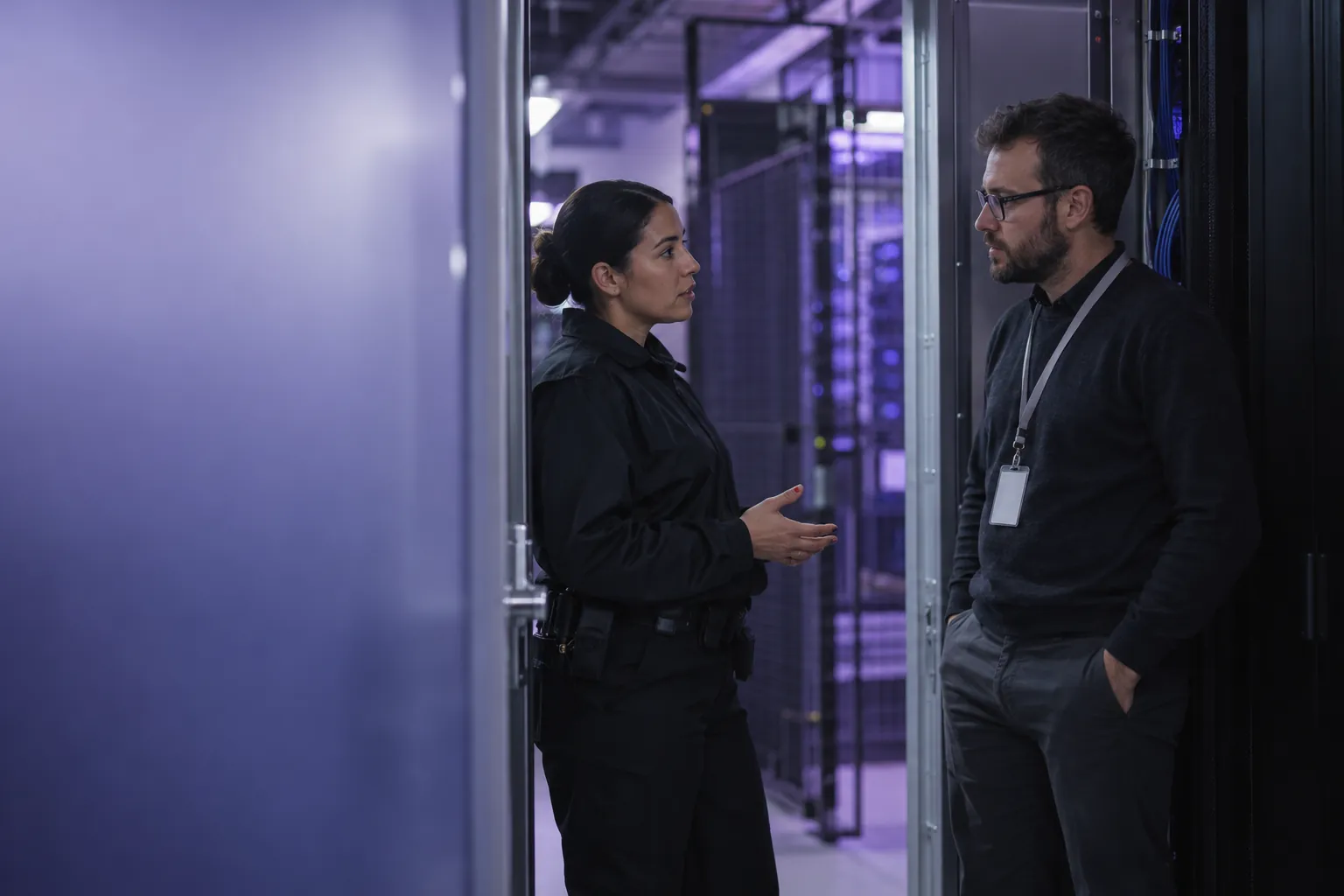
Three things that work differently when nothing can reach the internet: kiosks, tablets, web widgets and internal messaging reach the platform through the entity's own gateways, every action is written to an audit log held inside the network, and the vendor has no access unless the entity grants it for a defined task.
No cloud dashboard, no vendor-hosted survey links, no external SMS or e-mail provider. Every channel the programme uses must exist inside the network or pass through a gateway the entity controls.
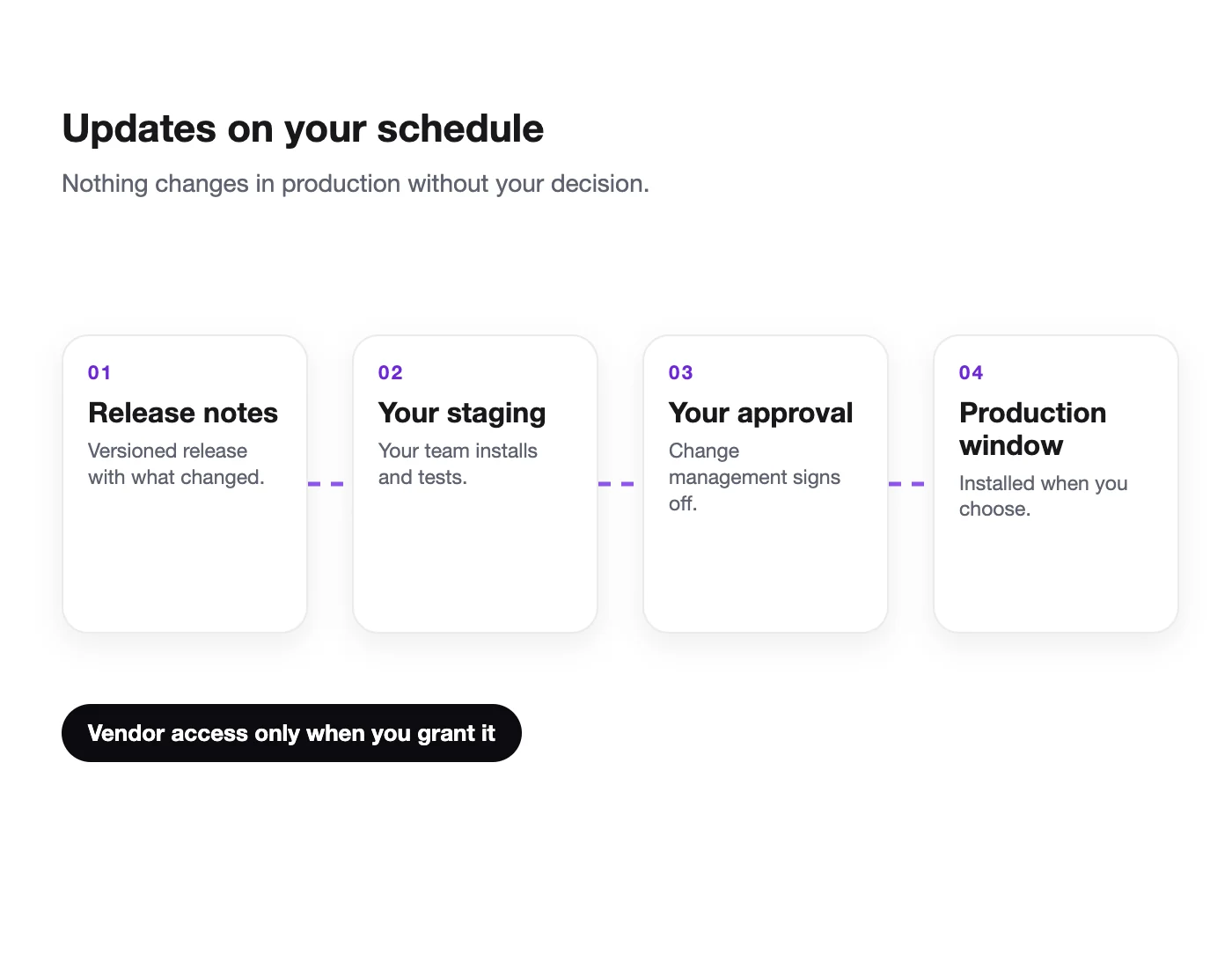
New versions arrive as signed release packages on media or through a controlled transfer point, are verified by the entity and applied on its change schedule. The platform must support this without a live connection.
Audit logs, case histories and exports are held and read inside the network. An oversight body is given access there, not through a vendor portal.
Each step produces a document the entity's IT and security teams can review.
Application servers, database and the survey channel endpoints are installed on the entity's infrastructure from a release package. Sizing and requirements are provided in writing first.
Kiosks and tablets on the internal Wi-Fi or wired network; web widgets on the intranet and internal portals; SMS and e-mail through the entity's own gateways where they exist; manual entry for feedback received on paper or by phone.
Release packages applied by the entity's team; backups and monitoring on its tooling; every login, assignment, reveal of personal data and export written to the audit log inside the network.
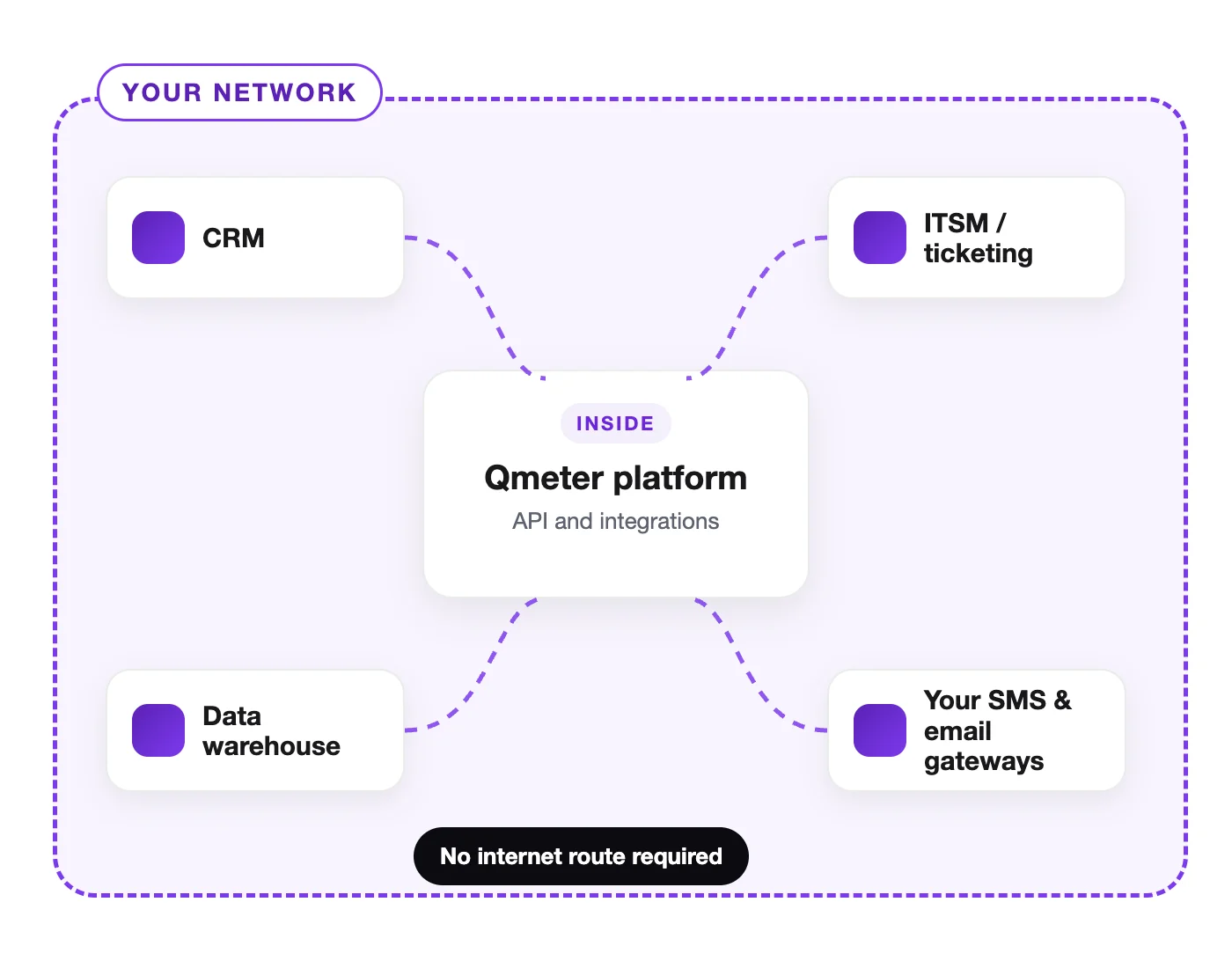
Code-drawn diagrams; the detailed architecture is provided in writing on the technical call.
The platform sits on internal servers. Kiosks, tablets and intranet widgets talk to it over the internal network; the entity's own SMS and e-mail gateways carry invitations and replies; the API connects cases to the internal case system or CRM. No component needs an outbound connection.
Releases are delivered as packages, verified and applied by the entity's team through its own change process. Vendor access, when needed, is granted by the entity for a defined task and logged. Role-based access, PII masking with audited reveal and retention rules are configured by the entity's administrators.
Agreed on the technical call and written into the deployment plan.
Servers or a private cloud inside the perimeter, and an IT operations team that applies releases, runs backups and monitors the platform on its own tooling.
Network access for kiosks and tablets, an intranet or portal for widgets, and, where the programme needs them, internal SMS and e-mail gateways.
A controlled way to bring verified release packages into the network: removable media or a transfer station, under the entity's own procedure.
The entity's security team reviews the architecture, access model and controls before go-live. We provide the documents; the review and the decision are the entity's own.
A plain comparison of three ways to run a feedback programme.
| Cloud or UAE-hosted instance | Isolated network (on-premise) | |
|---|---|---|
| Where the data lives | On infrastructure operated for the entity, inside the chosen country | On the entity's own servers, inside its perimeter |
| Updates | Applied by Qmeter on a published schedule | Release packages applied by the entity's team on its change schedule |
| Channels | Kiosks, QR, SMS, e-mail, web, apps through Qmeter's gateways | Kiosks, tablets, intranet widgets, entity-owned SMS and e-mail gateways |
| Vendor access | Role-based, logged | None unless granted for a defined task, logged |
| Time to start | Days | Follows the entity's procurement, security review and infrastructure schedule |
The feature set is the same in both models; what differs is who operates the platform and where it runs.
Short, factual answers. For your entity's case, book a technical call.
No. Application, database, kiosks, tablets, intranet widgets, internal SMS and e-mail and the API all run inside the entity's network. Features that depend on external services, such as public SMS providers or AI translation through external models, are switched off or routed through the entity's own gateways.
Architecture, controls, integration and release process in detail.
→UAE-hosted or on-premise: what the frameworks ask.
→Tablets that keep collecting when the connection drops.
→Connecting feedback and cases to internal systems.
→Cases with owners, SLA timers, escalation and an audit trail.
→The full citizen feedback platform.
→A 30-minute technical call with your IT and security leads. You receive the requirements, the release process and the architecture in writing. A named person replies within one business day.