
Government — Gulf Cooperation Council

Government service satisfaction programmes across the Gulf

Each Gulf state measures government services nationally: the UAE's Star Rating and Happiness Meter, Saudi Arabia's Digital Experience Maturity Index, Qatar's Sharek, Oman's NCSI survey, Bahrain's Tawasul and Kuwait's Sahel. The national programme shows the standing; the entity's own continuous feedback moves it.

One platform, in Arabic and English, hosted in the region or on the entity's own servers, for one municipality or a multi-country ministry.

Qmeter runs visitor feedback for public cultural institutions in Abu Dhabi and customer feedback for banks and service networks across the Gulf and the Caucasus, in Arabic and English.

WhatsApp usDiscuss a pilot

A named person at Qmeter replies within one business day.

A calm modern public service hall in the Gulf with citizens waiting and a staff member walking past
Country by country

Oman, Bahrain and Kuwait: what is measured nationally

The UAE, Saudi Arabia and Qatar have their own pages. Here are the other three, from public sources: Oman's National Centre for Statistics and Information semi-annual beneficiary satisfaction survey, Bahrain's Tawasul national suggestions and complaints system, and Kuwait's unified Sahel services app.

Oman: the NCSI beneficiary satisfaction survey

The National Centre for Statistics and Information runs a semi-annual survey of individuals, private-sector institutions and government units on the services they received, with rounds in 2025 and 2026. A 2022 release lists the criteria: readiness of the service venue, staff competence, ease of procedures, speed, treatment of the client, and cost, quality and efficiency of the service.
Bahrain: Tawasul

The Information & eGovernment Authority's national suggestions and complaints system, launched in 2014, gives the public one channel to every government entity. Each entity handles cases to a set performance indicator and timeframe; since 2023 users can also rate the entity's response.

Kuwait: Sahel

Kuwait's unified government services app, through which the Cabinet reported more than three million users and more than 52 million transactions in a year. We found no published national satisfaction index for government services; entities measure their own.

The common requirements

What every programme rewards, whichever country

Six programmes, three habits.

01

Ask at the moment of service, on every channel

Counter, phone, portal and app: one short question in Arabic and English right after the transaction, tagged with the service and the channel. The national survey then confirms what the entity already knows.

02

Handle every complaint to closure, with a record

Bahrain's Tawasul sets a timeframe per entity and lets the citizen rate the response; Saudi Arabia's index has a complaints-handling pillar. The entity's own cases need an owner, a deadline, a cause and the citizen's confirmation.

03

Report by centre and service, monthly

Oman's survey asks about venue readiness, staff, procedures and speed. An entity that reports these by centre every month is not surprised by the round's results.

Free readiness check · 3 minutes

How much of this evidence does your entity hold today?

Twelve yes/no questions. Score, gaps and next steps; the report can be sent to your e-mail.

How Qmeter fits

One platform, several countries, one standard

Real screens from a demonstration tenant; the names are illustrative.

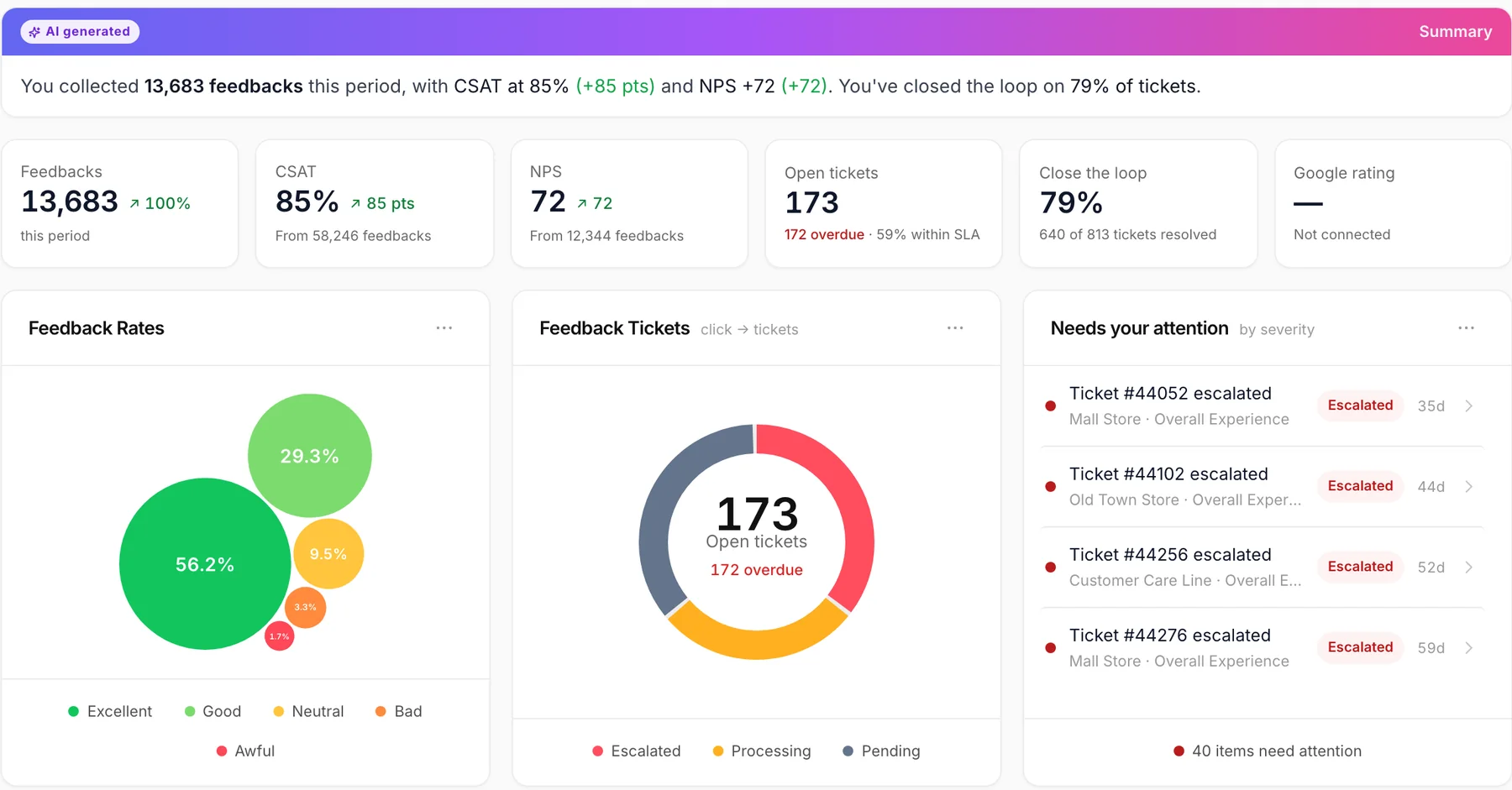
Centres in different countries on one dashboard

Each centre runs its own kiosks, QR codes and SMS; the authority sees all of them by country, centre, service and month, with scheduled reports per centre manager and per country lead. Hosting per country is possible where the law requires it.

  • Results by country, centre, service and employee
  • Arabic right-to-left plus English and further languages
  • Scheduled reports per manager
  • Hosting in the region or on-premise per country
Qmeter dashboard with satisfaction indicators by location and period (demo data)

The same complaint loop everywhere

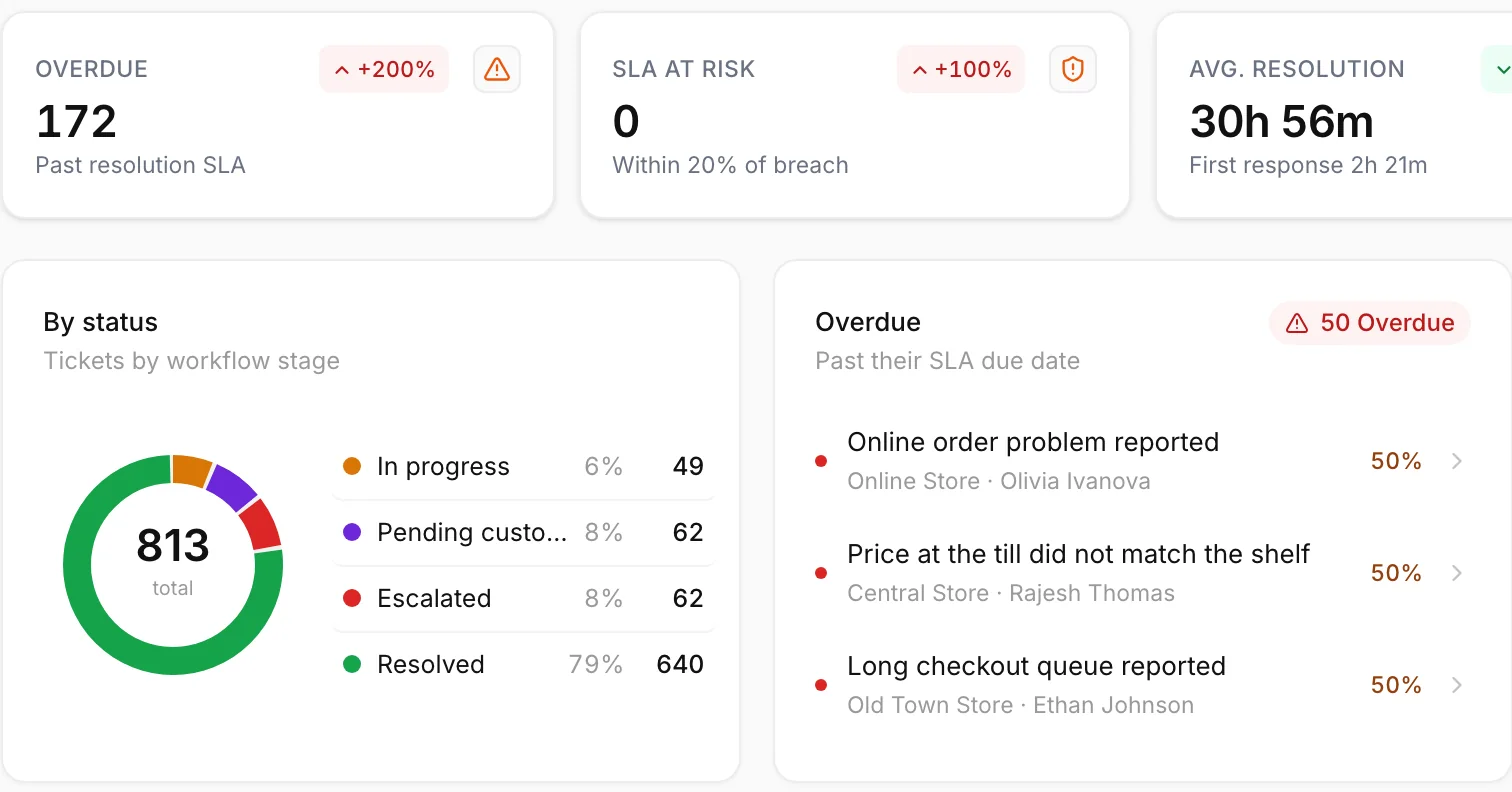
A low rating or a complaint opens a case with a named owner and a deadline, wherever it was collected. Status, owner and SLA are visible on every case; escalation is automatic; the citizen is asked whether the fix worked.

  • Named owner and deadline on every case
  • Escalation when a deadline slips
  • Citizen confirmation after closure
  • Audit trail for the quality unit
Case status overview in Qmeter: open, in progress, overdue and resolved (demo data)
Built for Gulf public entities

What IT, security and procurement will ask

Short answers; details in writing on a technical call.

Languages

Arabic first, with English and the languages of resident communities. See multilingual surveys.

Personal data

Anonymous ratings by default; contact details only on request, with PII masking and audited reveal. See security.

Offline centres

Tablets keep collecting when the network drops and sync later. See offline survey app.

Sources

The public documents this page is based on

FAQ

Gulf government feedback programmes, answered

Short, factual answers. For your own entity, talk to a named person.

Which Gulf states publish a government service satisfaction figure?›

The UAE (Star Rating results and Customer Happiness Index), Saudi Arabia (Digital Experience Maturity Index), Qatar (statements by the Civil Service and Government Development Bureau) and Oman (NCSI survey rounds) publish results or figures. Bahrain publishes Tawasul case and response statistics. For Kuwait we found no published national satisfaction index.

Keep exploring

Related pages

Get started

One standard for every centre, in every country

Run Qmeter in one centre for a month and extend it from there. A named person at Qmeter replies within one business day.

WhatsApp us