Touchpoint
✓ Cloud or on-premise · ✓ Kiosk, QR, SMS, email and web · ✓ Live in one day
A touchpoint is any single point of contact between a customer and a business — a branch visit, a phone call, an invoice, an app screen, a delivery, a queue. Customer journeys are made of touchpoints, and a feedback program’s first decision is which touchpoints to measure and with which channel.
What a customer touchpoint is
Every moment where a customer sees, hears, uses or talks to your organisation is a touchpoint. Some are designed (a website, a reception desk, a welcome email); others are not, but count just as much (a car park, a hold message, a confusing invoice line). Customers do not distinguish between them — they judge the business on the sum.
Touchpoints are the building blocks of a customer journey map. The map arranges them in order; the feedback program measures the ones that matter. That second part is where the concept becomes operational: a touchpoint you cannot measure is a touchpoint you cannot manage.
Types of touchpoints
| Type | Examples | Best-fitting feedback channel |
|---|---|---|
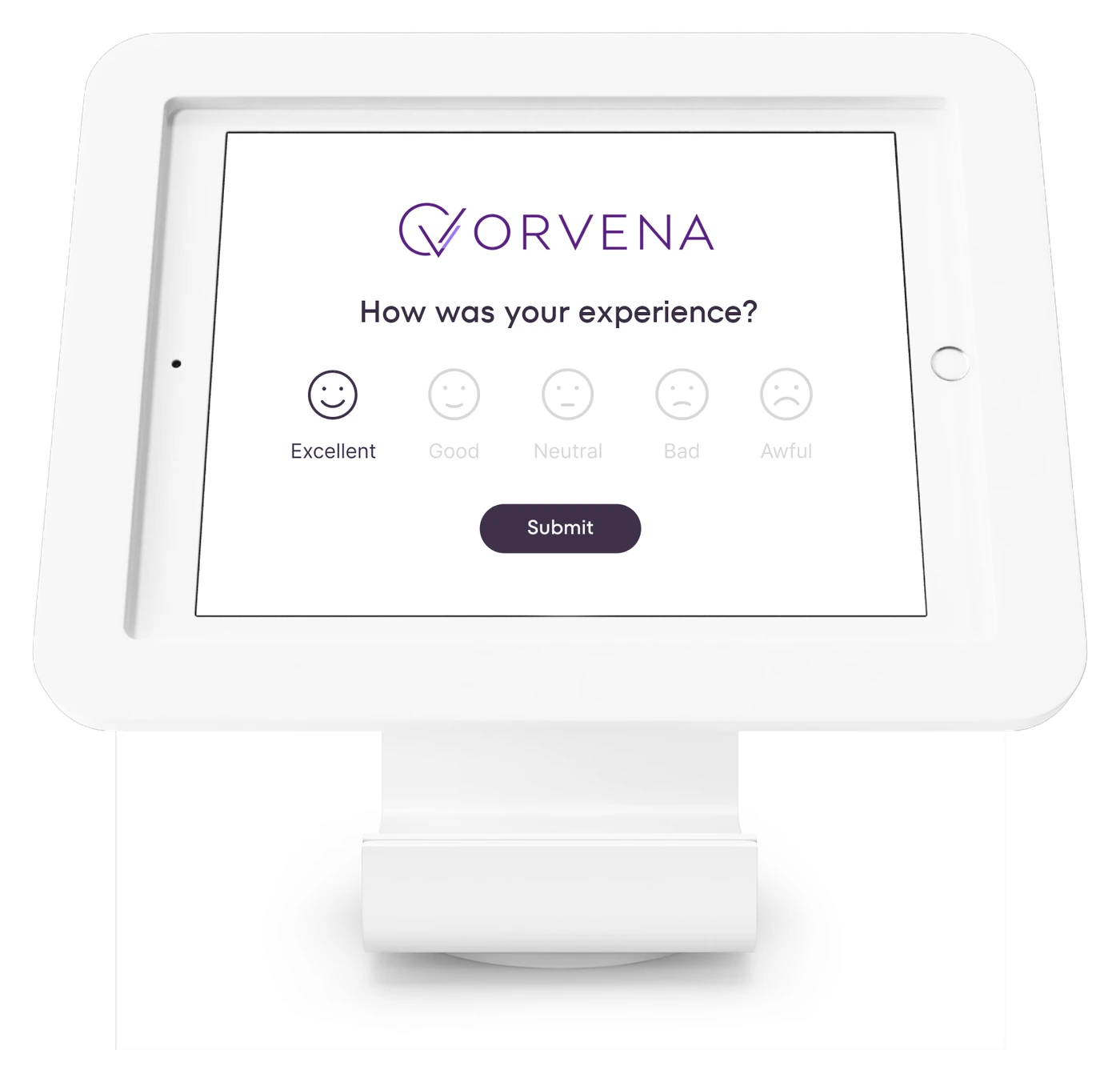
| Physical, staffed | Bank counter, hotel reception, clinic registration, checkout | Kiosk or tablet at the exit; QR code at the desk |
| Physical, unstaffed | Waiting area, washroom, self-service machine, car park | QR code or small kiosk on site |
| Remote, human | Phone call, home visit, delivery | SMS or email right after the interaction |
| Digital | Website, app, online booking, chat | Web widget or in-app survey after a completed action |
| Paper and documents | Invoice, receipt, contract, letter | QR code printed on the document |
Another useful split is before, during and after: pre-purchase touchpoints (adverts, reviews, website) shape expectations; service touchpoints deliver against them; post-service touchpoints (follow-up, billing, complaints) decide whether the customer comes back.
Which touchpoints to measure
Not every touchpoint deserves a survey. Measuring everything creates survey fatigue and a dashboard nobody reads. Prioritise touchpoints that meet at least one of these tests:
- Moment of truth — first contact, the main service, problem resolution, renewal.
- High volume — touchpoints most customers pass through, such as checkout or registration.
- Known pain — where complaints, call reasons or reviews already cluster (waiting is the usual suspect).
- Owned by one team — so a bad score has a clear owner who can act on it.
For each chosen touchpoint, ask one or two questions about that moment only. A transactional survey is the natural format: it is tied to a time, a place and often a team.
Example: touchpoints in a hotel stay
Example: a hotel lists 14 touchpoints from booking to post-stay email. It instruments four: a tablet at the front desk after check-in, QR codes on room cards for the room itself, QR codes on restaurant tables for breakfast, and an email survey after checkout for the overall stay and an NPS question. Each response arrives tagged with the touchpoint, so a fall in the breakfast score is visible as a breakfast problem, not as a vague dip in the overall rating.
How to measure and improve touchpoint performance
- Score per touchpoint — CSAT, a smiley rating or a stars rating, compared across locations and time.
- Effort where friction lives — a customer effort question after forms, transfers and queues.
- Comment themes — one optional open question, analysed for recurring topics.
- Response rate per touchpoint — a sudden drop often means a device is offline or a QR code was removed.
Improvement follows a simple rule: fix the lowest-scoring high-volume touchpoint first, then re-measure at the same place. In Qmeter, each kiosk, QR or web channel is linked to a branch and a survey template, so results already arrive grouped by touchpoint; device kiosks keep collecting when the internet drops and sync later.
Touchpoints and moments of truth
Not all touchpoints carry equal weight. A “moment of truth” is a touchpoint where the customer forms or changes their opinion of the business — the first visit, the moment something goes wrong, the way a complaint is handled. A slow car park barrier is a touchpoint; being told a loan was rejected without explanation is a moment of truth.
Moments of truth deserve the most careful measurement and the fastest follow-up. In practice they are often the moments where something goes wrong: a customer whose problem is handled well can end up more loyal than one who never had a problem, while a poorly handled problem is one of the most common reasons customers leave. That is why problem resolution should always be on the list of measured touchpoints.
Common mistakes
- Measuring only digital touchpoints because they are easy to survey, while the branch experience goes unmeasured.
- One generic survey everywhere. A question about “your visit” cannot tell registration from consultation.
- No location tag. Without branch and touchpoint on each response, the data cannot be acted on locally.
- Asking too late. Memory of a single touchpoint fades within days.
Frequently asked questions
What is a touchpoint in customer experience?
A touchpoint is any point where a customer interacts with a business — in person, by phone, online, through a document or a delivery. Customer experience is the sum of how all those touchpoints feel.
What are examples of customer touchpoints?
Examples include a website, a booking form, a reception desk, a waiting area, a checkout, a phone call, an invoice, a delivery, a support chat and a follow-up email.
How many touchpoints should you measure?
Start with the three to five moments of truth in a journey — usually first contact, the main service, waiting and problem resolution — and add more only when each one has an owner who will act on the results.
What is the difference between a touchpoint and a channel?
A touchpoint is the moment of contact, such as checkout. A channel is the medium used, such as in person, phone, web or SMS. One touchpoint can involve several channels, and feedback channels should be chosen to fit the touchpoint.
Measure it at every location — live in one day
Feedback kiosks, QR and web surveys, SMS and email, real-time alerts and follow-up tickets in one platform. 14-day free trial.
✓ 15 minutes · ✓ No commitment · ✓ A real CX person